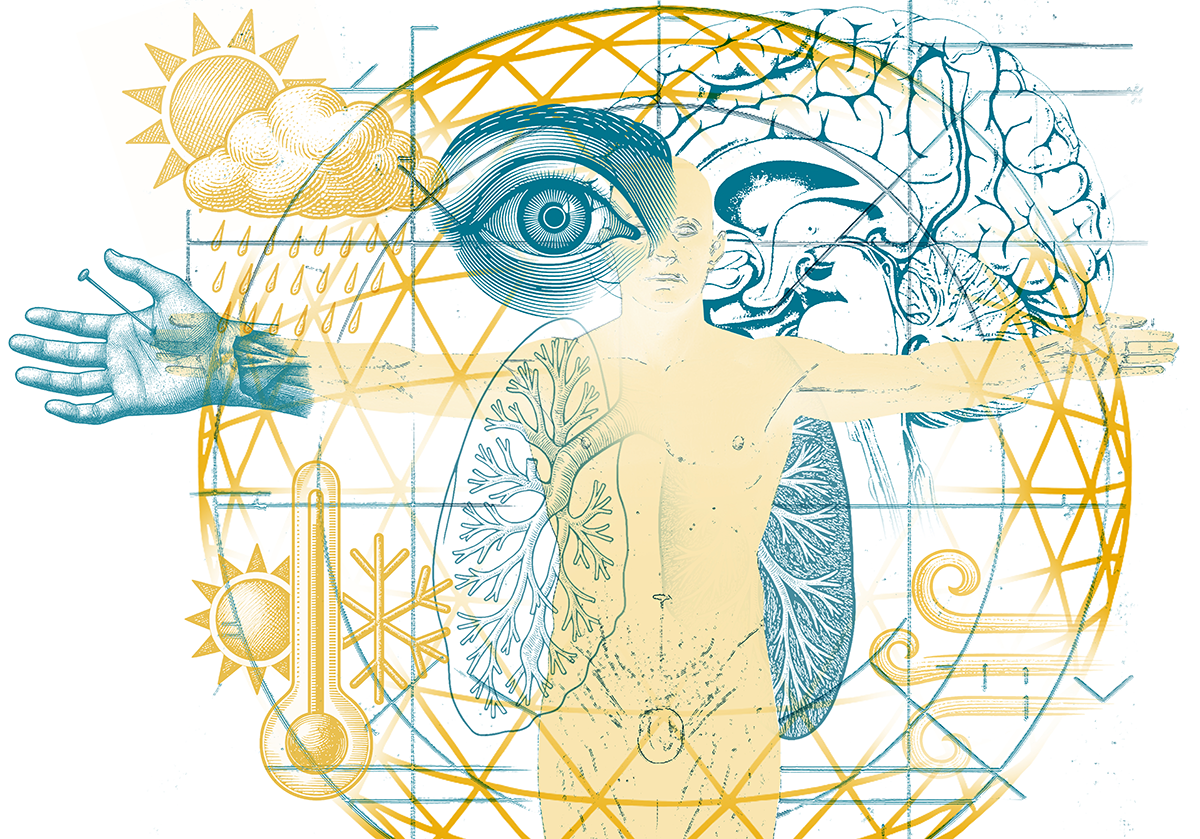
We all have gut feelings about places – but what story do our bodies tell? In our review paper “Biometric Data as Real-Time Measure of Physiological Reactions to Environmental Stimuli in the Built Environment” (published in Energies, 2021), my co-authors and I explored how real-time biometric signals – such as heart rate variability, skin conductance, and EEG – can help us understand how people physiologically respond to indoor environments. We wanted to move beyond self-reported comfort surveys toward objective, time-sensitive measures that reveal how buildings affect our bodies in real time.
As we reviewed the literature, we found that while there’s growing enthusiasm for these technologies, the research landscape is still quite fragmented. Many studies focus on sensor development or medical applications rather than on built-environment contexts. Even when physiological signals are measured, the connection to indoor environmental parameters (like temperature, lighting, air quality, or acoustics) is often inconsistent or weak. This lack of alignment makes it difficult to compare studies or apply the findings to design practice.
Through this work, we wanted to highlight both the potential and the limitations of using biosignals in architectural and environmental research. To make real progress, we need more studies conducted in real-world settings, clearer standards for data collection and interpretation, and stronger integration between building science and human physiology. The technology is ready, now the challenge is to build the methodological bridge that will allow these tools to meaningfully inform design and environmental performance.
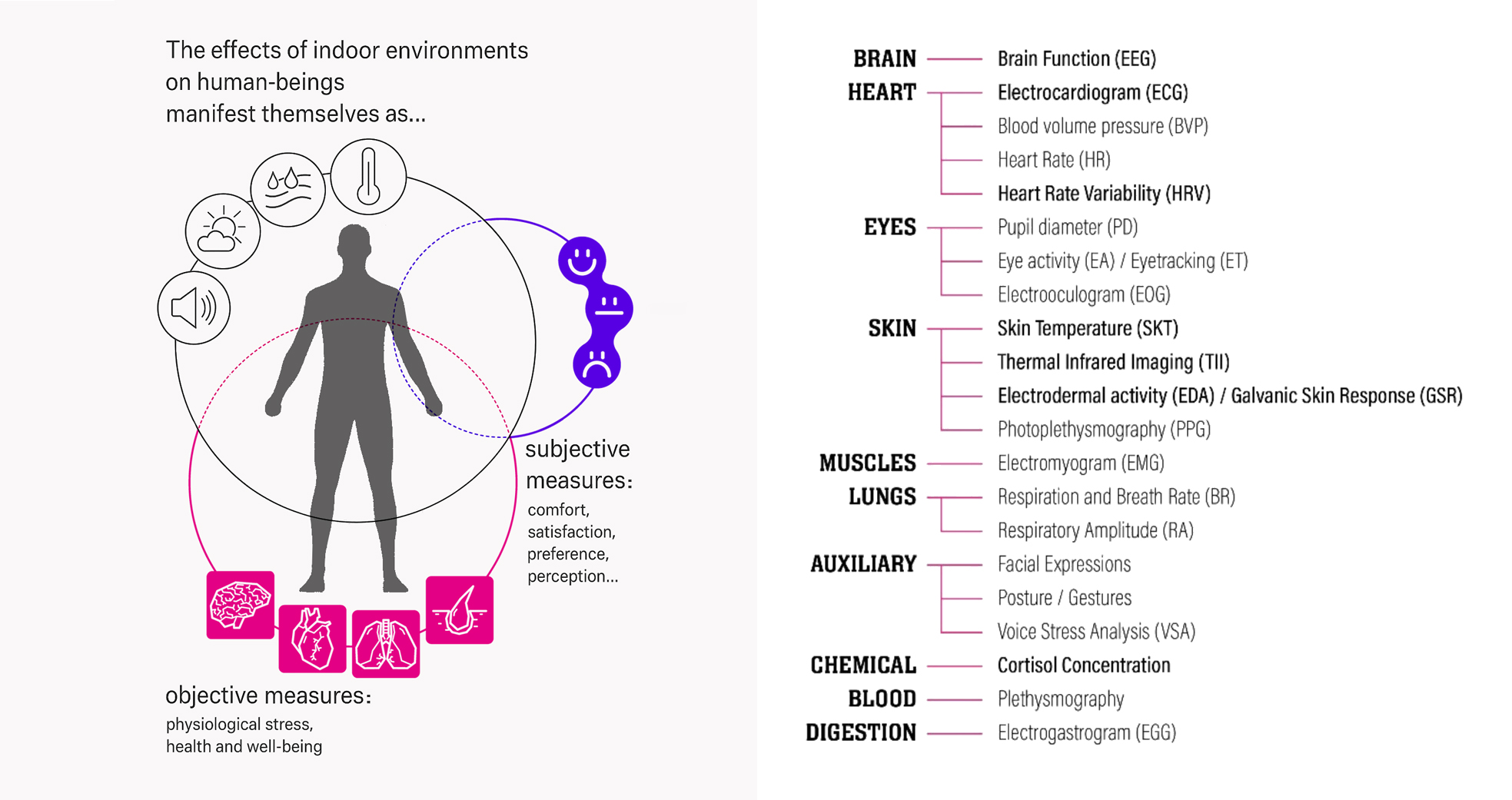
Left, graphical abstract. Right, biosignals relevant to measure environmental stress souces (from the literature review), in bold those examined in this paper.
Based on:
Persiani, S.G.L.; Kobas, B.; Koth, S.C.; Auer, T. (2021) Biometric Data as Real-Time Measure of Physiological Reactions to Environmental Stimuli in the Built Environment. Energies, 14 (1), 232. DOI 10.3390/en14010232