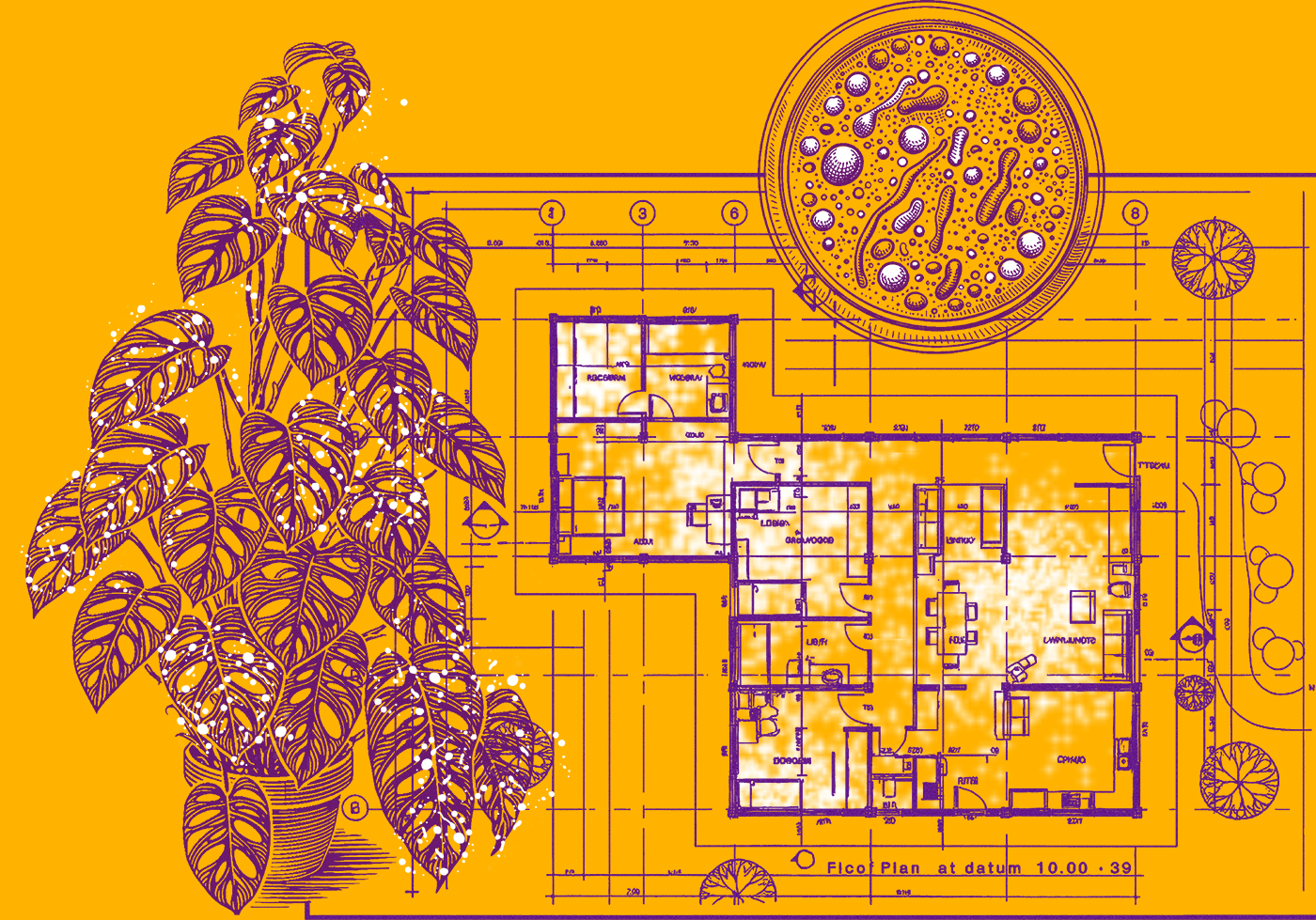
SymBIO investigates how indoor microbial communities are shaped by the interaction between people, plants, and buildings. While indoor plants are increasingly recognized for their benefits to indoor environments and for hosting diverse microorganisms that are often beneficial or neutral to human health, scientific understanding of their influence on the indoor microbiome remains limited.
Existing studies have typically focused on private homes or controlled laboratory environments, often over short or seasonally constrained periods. SymBIO expands this perspective by examining real-world office environments over an extended time frame, treating humans, plants, and buildings as interconnected agents within one ecosystem.
Research Approach
Study design: Mixed experimental and correlational field study
Duration: 18 months (including seasonal variation)
Setting: 15 office spaces across five Chairs at the Technical University of Munich (TUM), City Center Campus
Environmental controls:
– Hard flooring, similar cleaning routines
– No central air circulation; natural ventilation via windows (primarily April–September)
Human presence: Not controlled; occupancy patterns assessed post-hoc and cross-referenced with microclimate data
To examine microbial exchange and plant-driven effects, movable planters with substantial degrees of greenery were introduced. Four rooms received intensified greenery through semi-hydroponic units containing identical plant species (Monstera deliciosa, Syngonium, Philodendron Imperial Green, Anthurium, Aglaonema, Aspidistra). Five rooms already contained conventional ornamental potted plants prior to the study.
Planters were periodically moved between offices to trace potential microbe transfer pathways.
Collaboration
Department of Architecture, Technical University of Munich (TUM)
Faculty of Biology, Ludwig-Maximilians-University Munich (LMU)
Deutsches Institut für Mykologie, Bayreuth, Germany
Funding agent Alexander von Humboldt Research Fellowship
State of the project
Data collection completed
Data analysis in progress
Publication of results in progress
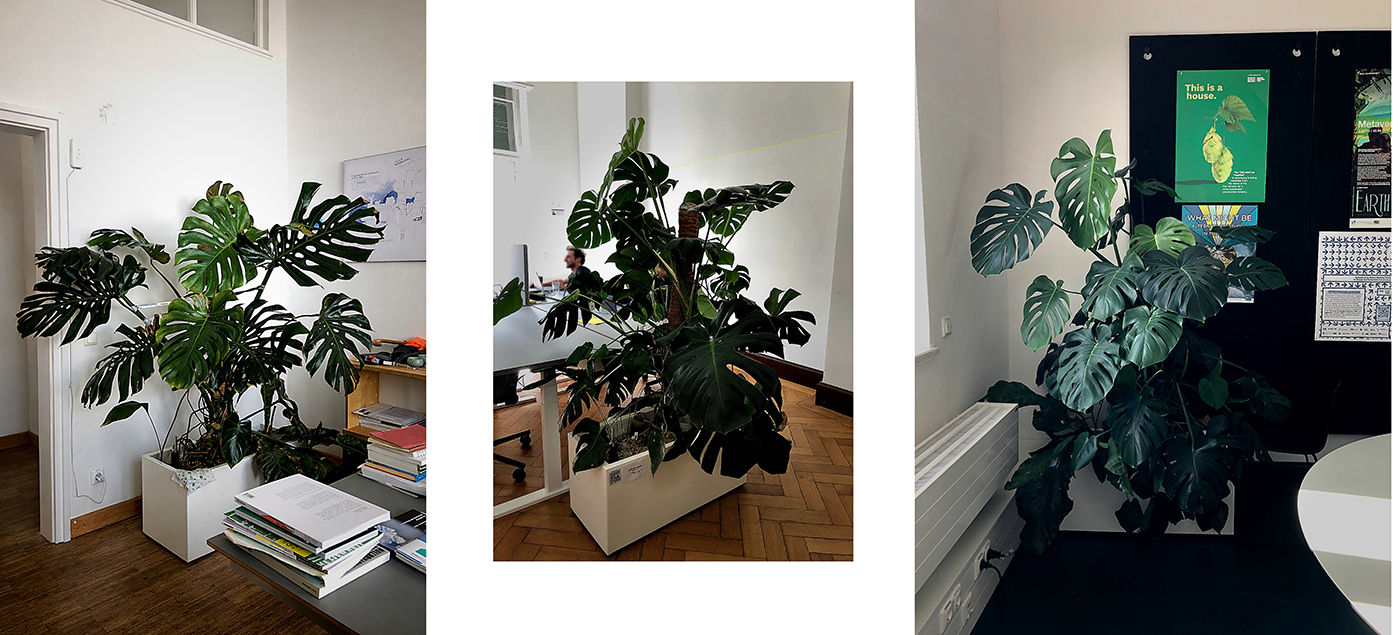
Above, planters introduced in three of the testing spaces, pictures taken one year after the completion of the data collection.
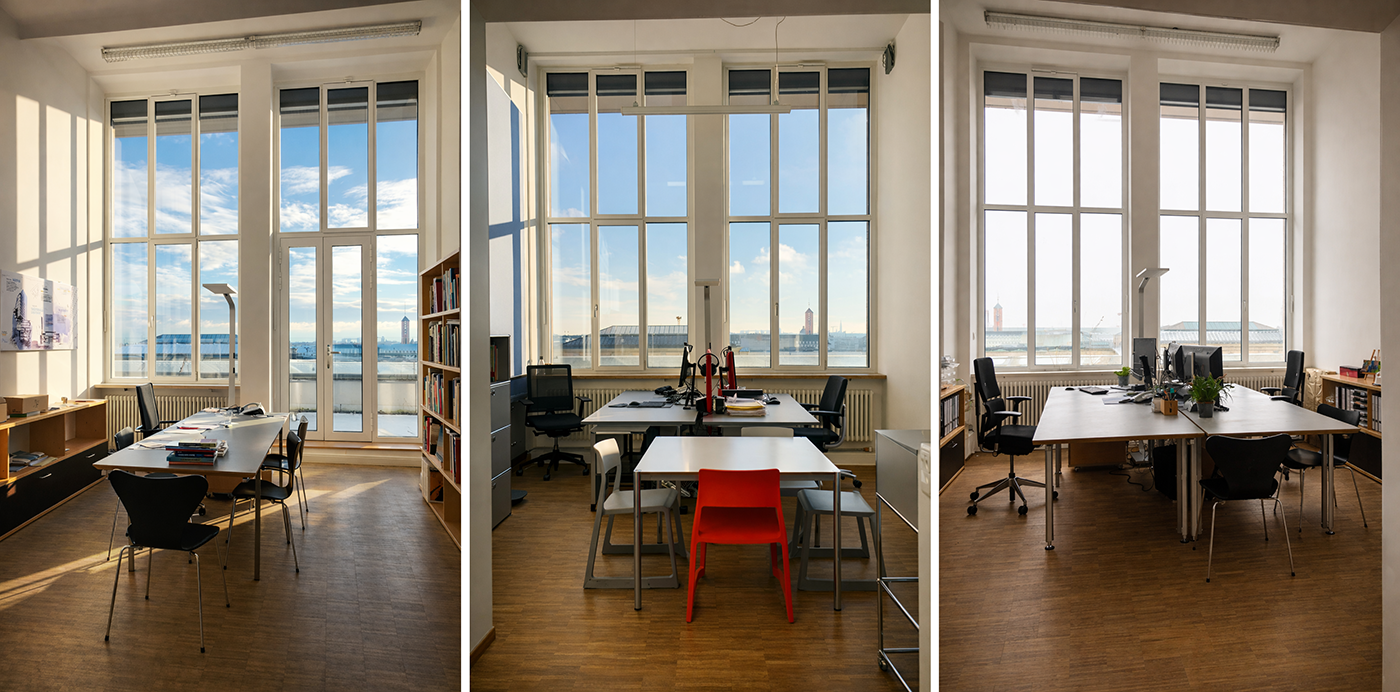
Above, three office rooms used for studing an alternate scenario (one room as baseline with no plants, two other rooms exchanging the same planter every 2 months).