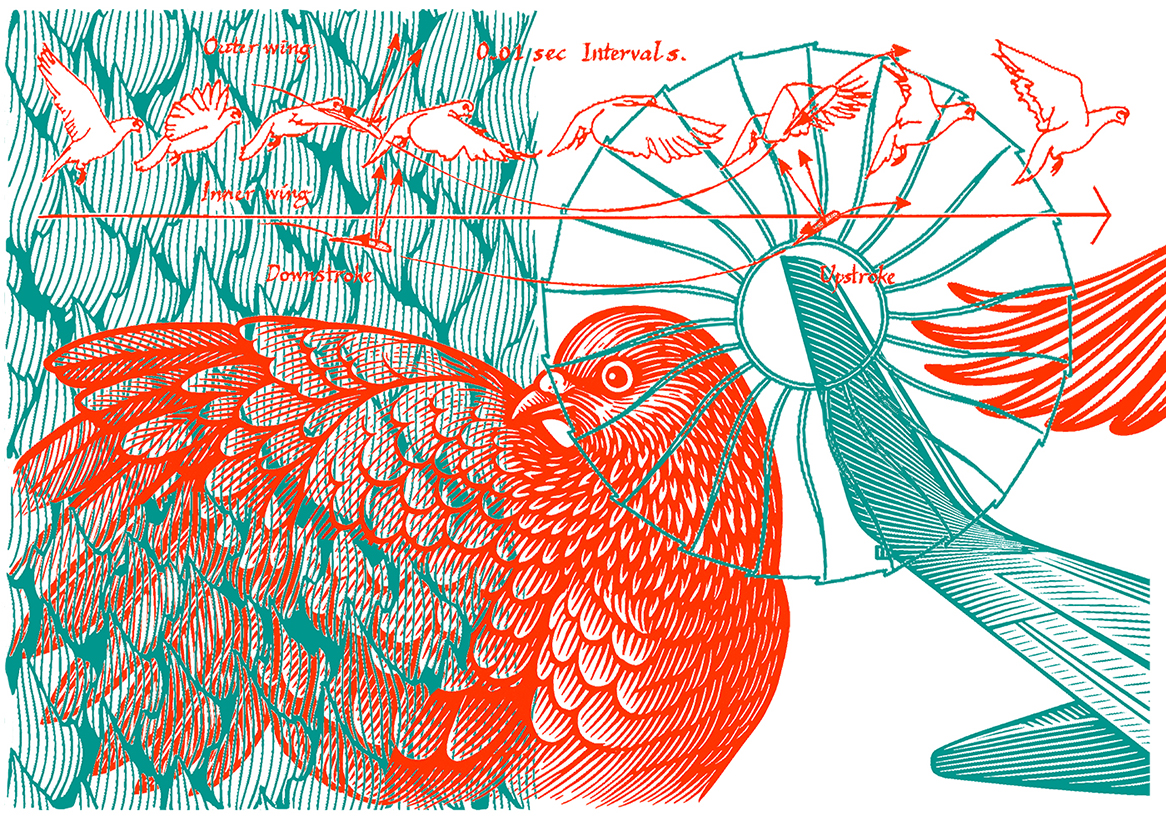
If nature is often the best inventor. Architects, engineers and designers can learn a great deal by studying how living systems move.
The book “Biomimetics of Motion, Nature-inspired Parameters and Schemes for Kinetic Design” gathers and catalogs a wide variety of natural motion strategies, from plants to animals, and distills them into design-relevant parameters and schemes. The aim is to give practitioners a practical “toolbox” of kinetic features to embed in architecture, engineering or design projects, without requiring deep specialization in biology.
The core content of the book is structured around geometry, mechanics and rhythm — three foundational aspects of movement in living organisms. Through detailed analysis and classification, it shows how these aspects combine in nature’s most successful motion systems. Through case studies drawn from flora, invertebrates and vertebrates, it demonstrates how motion principles can be translated into design solutions. Examples include slow hydraulic movements in plants, rapid elastic reactions in seed-dispersing mechanisms, and more complex locomotion patterns of animals.
Incorporating nature’s strategies of movement into human-made systems enables the development of smart architectural and design solutions that can adapt though movement to their context. Such designs have the potential to respond to changing conditions (light, temperature, occupation), adjust shape or structure dynamically, and integrate motion as a fundamental dimension. For anyone interested in sustainable, bio-inspired, and future-oriented design, the book offers a rich and systematically organized source of inspiration.

Above, extracts from the book
Based on:
Persiani, S. G. L. (2018): Biomimetics of Motion, Nature-inspired Parameters and Schemes for Kinetic Design. Cham. Springer International Publishing. 185 pp. DOI 10.1007/978-3-319-93079-4
One Comment