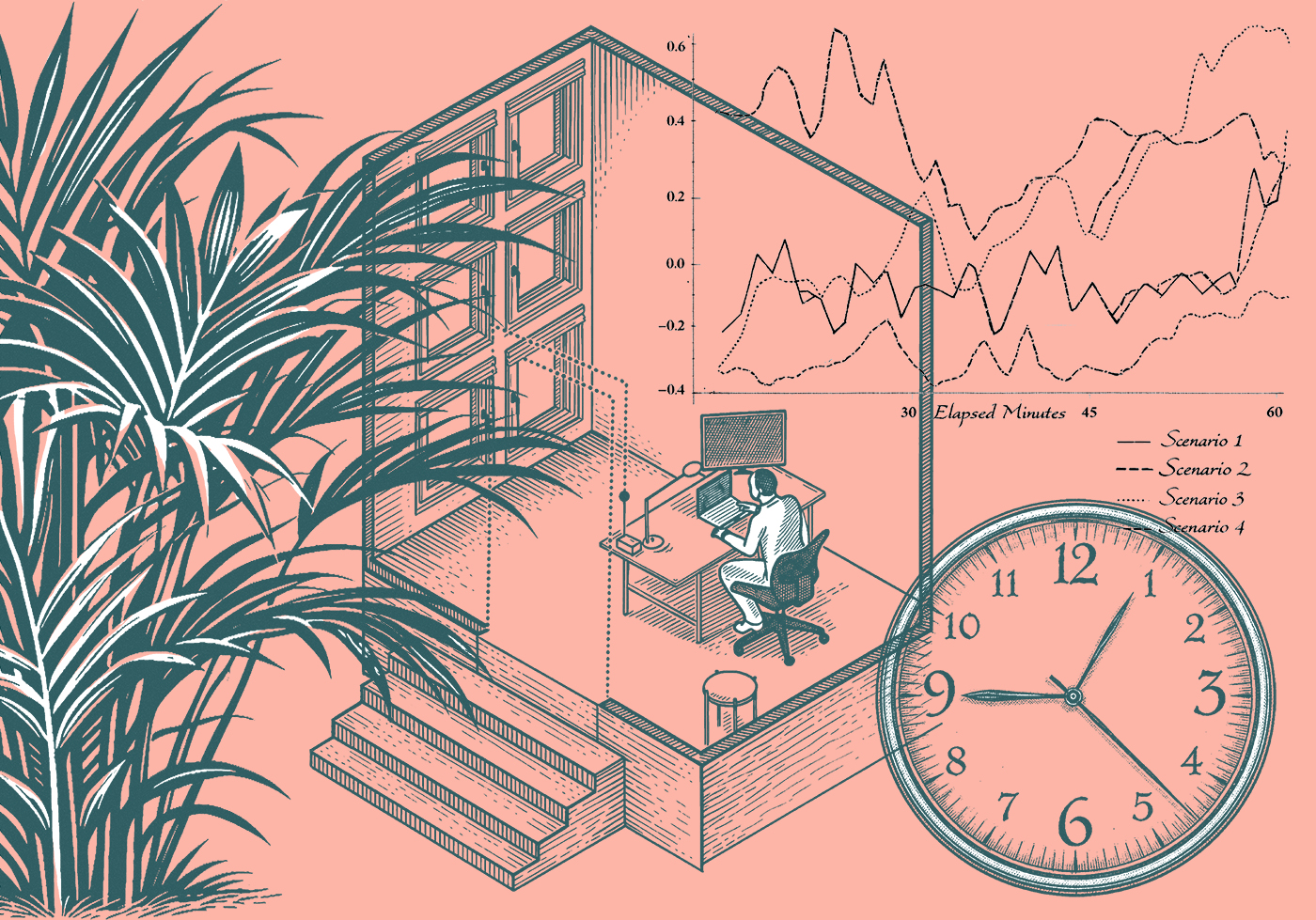
As we spend an increasing amount of time in highly artificial, human-made environments, reintroducing nature indoors – particularly through living plants – has emerged as a potential way to improve the quality of our everyday spaces. While the psychological benefits of indoor greenery are well established, far less is known about its direct physiological effects.
Green Placebo investigates whether the presence of plants produces measurable bodily responses beyond perception and mood, and how indoor plants interact with environmental conditions in a realistic office-like setting.
Research Approach
Study design: Experimental laboratory study (crossover design)
Duration: 1 day per participant
Setting: Climate-controlled lab; 1 participant at a time; 4 sessions of 90 minutes each
Conditions:
– No greenery (baseline)
– Real indoor plants (intervention)
– Artificial plants (placebo)
– Real plants outside the window (control)
Metrics:
– Environmental parameters: temperature, humidity, air quality
– Human physiological responses: biometric data (e.g. stress-related indicators)
– Wellbeing and performance: standardized psychological and cognitive tests
Collaboration
Bilge Kobas, Chair of Building Technology and Climate Responsive Design, Technical University of Munich (TUM)
Funding agent Alexander von Humboldt Research Fellowship
State of the project
Data collection completed
Data analysis completed
Publication of results in progress
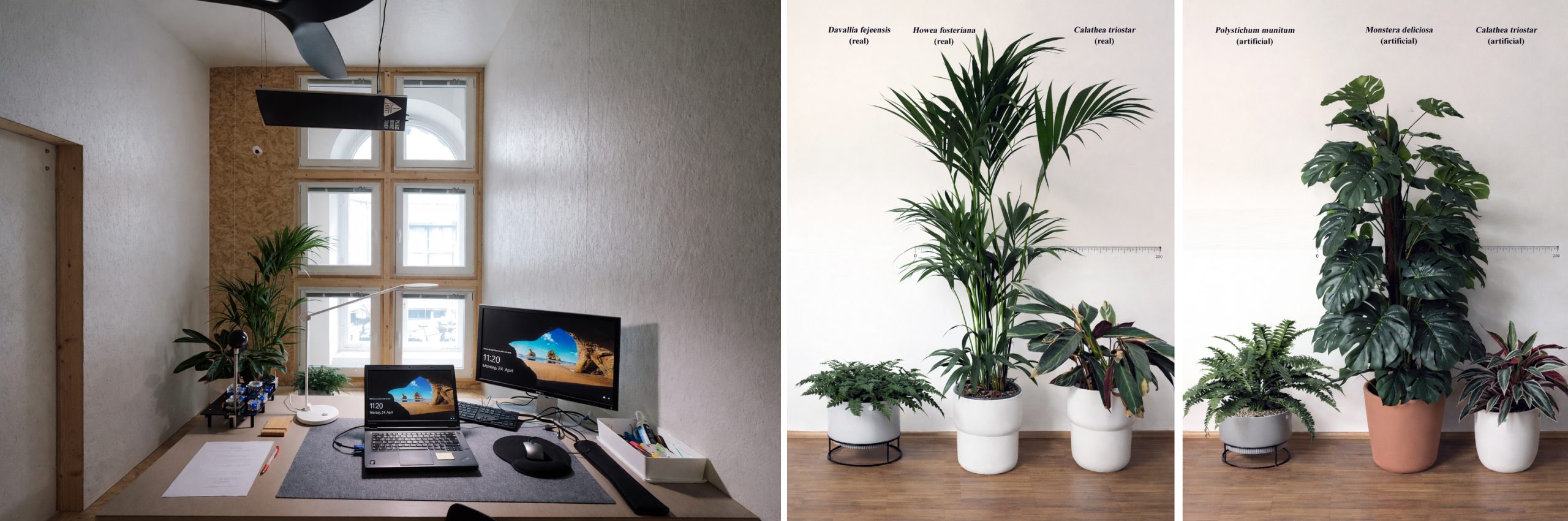
Left, experimental setting inside the testing room, viewed from the test subject’s perspective. Right, plants used in the experiment (real plants vs artifical “placebo” scenario).