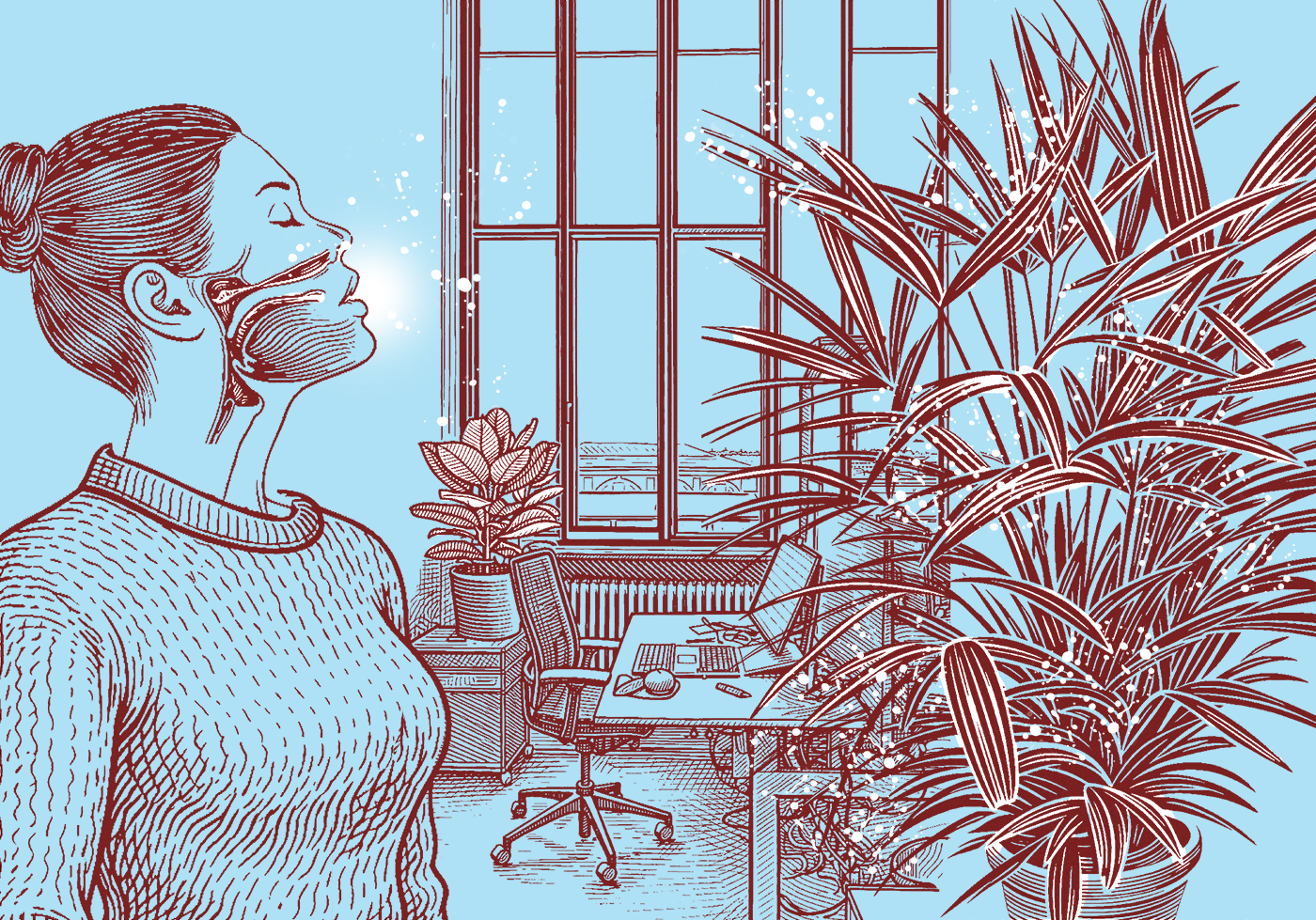
BREATHED AIR explores how indoor plants can influence the microbial diversity of built environments and how these microbial communities may interact with the human nasal microbiome. Through this work, I aim to better understand how the design of our indoor spaces – where we spend most of our time – can support healthier microbial ecosystems and, ultimately, human health.
Research Approach
Study design: Mixed experimental and correlational field study
Duration of data collection: 6 months (winter season)
Setting: 19 office spaces across the Technical University of Munich (TUM), City Center Campus
Collaboration
Chair of Building Technology and Climate Responsive Design, Technical University of Munich (TUM)
Professorship for Environmental Microbiology, Technical University of Munich (TUM)
Institute of Comparative Microbiome Analysis (COMI), Helmholtz Munich
Faculty of Biology, Ludwig-Maximilians-University Munich (LMU)
Funding agent Laura Bassi Fellowship, Bavarian State Ministry of Science and the Arts
The Laura Bassi Fellowship supports female scientists in advancing their research and academic careers.
State of the project
Data collection completed
Data analysis in progress
Publication of results in progress
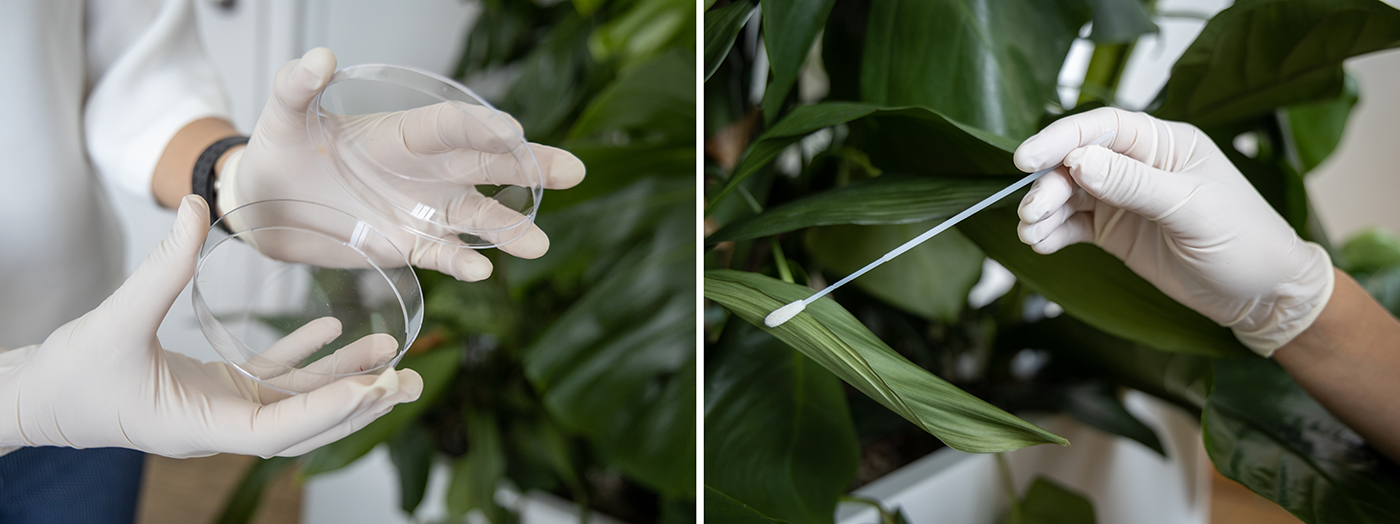
Left, collection of settled dust samples. Right, collection of plant microbiome swabbing the top and bottom of selected plant leaves (image credits: Tassilo Letzel / TUM Department of Architecture)
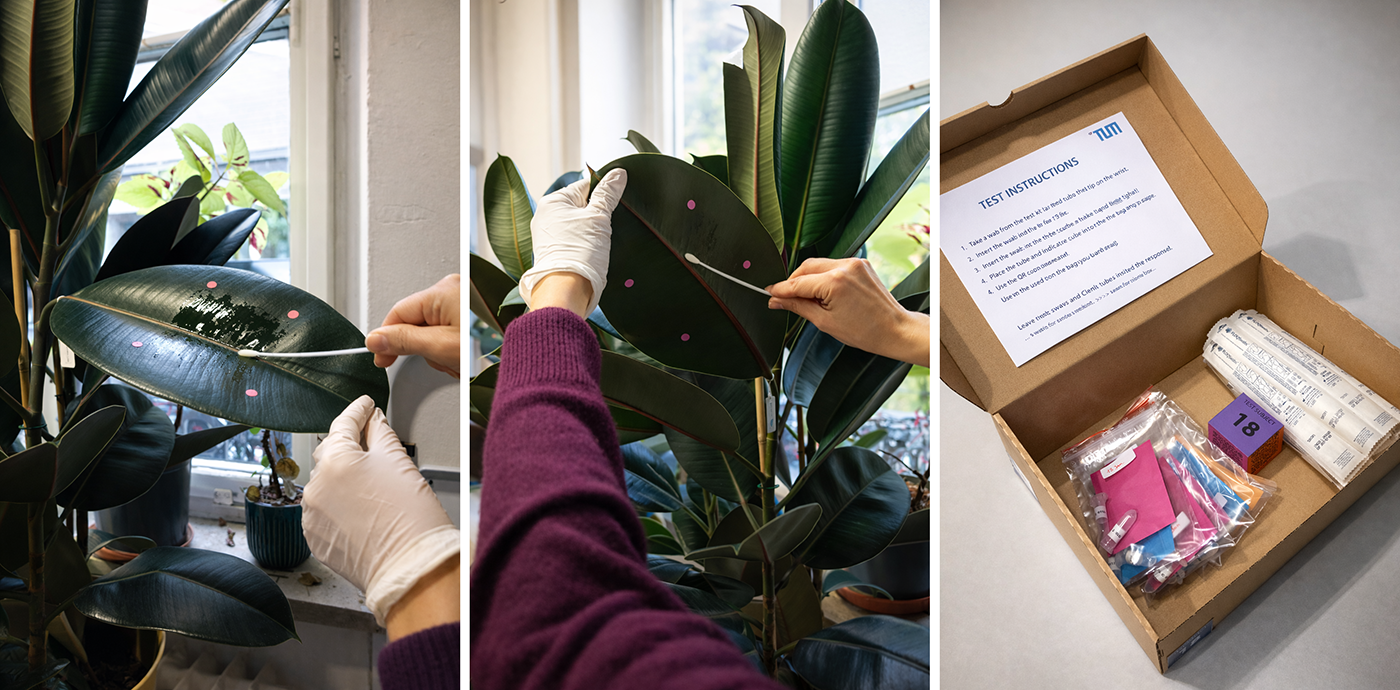
Left, swabbing of the plant leaves top and bottom (separate samples). Right, nose swab testing kit distributed to the test subjects.